Prada Biker Leather Jacket: Fit, Style, Care Guide
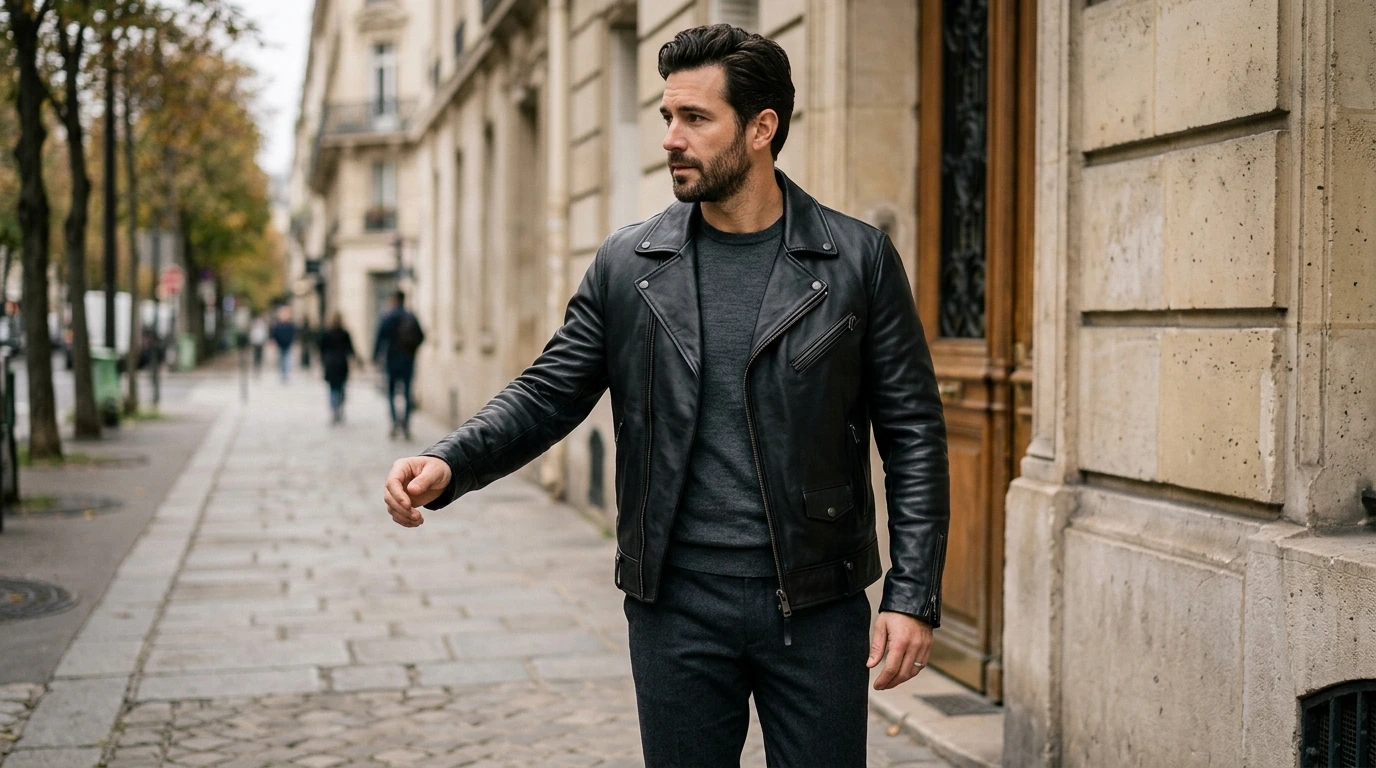
Prada Biker Leather Jacket: Modern Moto Polish with Luxury Finish
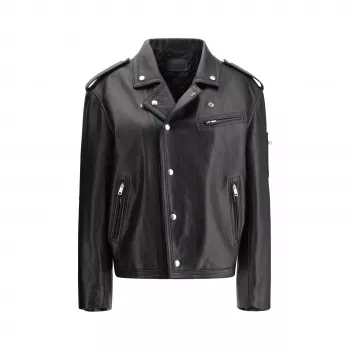
A biker jacket is one of the few outerwear pieces that can look sharp with tailoring and still feel natural with denim and boots. The Prada Biker Leather Jacket pairs the classic moto silhouette—structured shoulders, angled hardware, and a close, protective fit—with refined finishing that reads unmistakably luxury.
Why a biker jacket stays relevant
The biker jacket earned its place as a staple by being practical first. Zippers, lapels, and a fitted body were designed for wind protection and easy movement, and those same details translate into strong, wearable style today.
It also adds instant structure to almost any outfit: it defines the shoulder line, brings contrast to softer fabrics like knits, and sharpens casual basics like tees and denim. Because the shape is streamlined, it works across seasons—ideal as a top layer in transitional weather and as a mid-layer under a longer coat when temperatures drop.
Design highlights to notice on a Prada moto silhouette
Small design choices separate a “good” moto jacket from one that looks elevated and intentional. On a Prada-leaning silhouette, pay attention to proportion and restraint: the jacket should read sleek, not bulky.
- Asymmetrical front zip that frames the torso and layers cleanly over knitwear.
- Notched lapels plus a collar that can close up higher for extra wind coverage and a sharper profile.
- Zipped cuffs and strategically placed seams that support a close fit without restricting movement.
- Hardware placement that feels balanced and modern, avoiding excess weight or visual clutter.
Leather, lining, and construction: what affects comfort and longevity
Leather jackets are as much about how they feel after the 20th wear as the first. Leather type and finish influence how quickly the jacket softens, how it drapes, and how it develops patina over time. A smoother finish tends to look crisp and polished; more natural texture often shows character earlier.
Lining matters for day-to-day comfort: a quality lining helps the jacket slide smoothly over layers and reduces stress on seams as you move. It also makes the piece easier to wear in temperature swings—over a tee indoors, over knitwear outside.
Construction is the quiet indicator of longevity. Look for clean stitching, reinforced stress points (cuffs, pockets, and the base of the zipper), and tidy seam finishing. For material background and care considerations, references like Britannica’s overview of leather and industry guidance from the Leather Working Group can be helpful context when comparing leather goods.
Fit and sizing: getting the biker shape right
A true biker fit should sit close at the shoulders with enough room to comfortably bend your arms and zip up over a thin-to-medium layer. If the jacket looks perfect standing still but fights you when you reach forward, it’s likely too tight across the upper back.
Hem placement changes the vibe. Cropped-to-hip lengths emphasize the classic moto look and work well with higher-rise trousers. Longer hems read more like a leather coat and can feel less “biker,” more streamlined outerwear.
If you’re between sizes, choose based on how you’ll wear it most. Prefer sweaters or thicker knits? Consider sizing up. Want a sharper line over tees and shirts? Staying true to size typically looks cleaner. Sleeve length should reach the wrist with arms relaxed; zipped cuffs can fine-tune the opening around gloves or watches.
Quick fit checklist
| Area | What to check | Good sign |
|---|---|---|
| Shoulders | Seam alignment at shoulder edge | No pulling or collapsing; clean shoulder line |
| Chest | Zip closed over a light layer | Comfortable breath and movement; no strain at zipper |
| Arms | Elbow bend and reach forward | No tightness across upper back; sleeves stay near wrist |
| Waist/hem | Sitting and standing posture | Hem doesn’t ride up excessively; sits flat |
| Collar/lapels | Worn open and closed | Lays flat open; closes without choking when up |
How to style it for different settings
Care and storage for leather jackets
For broader fashion materials and sustainability context, the CFDA offers industry-facing information that’s useful when evaluating how leather goods are made and maintained.
Authenticity and quality checks when purchasing
Prada Biker Leather Jacket at a glance
- Product name: Prada Biker Leather Jacket
- Price: 3874.44 USD
- Availability: In stock
- Best for: a sharp, structured layer that elevates casual outfits and complements tailored pieces
Also in stock
- Jacquemus Torneo Mélange Sport Shorts for Men
- AI’s Blind Spots | Digital Guide to Understanding the Limits, Biases, and Boundaries of Artificial Intelligence
- Simple AI-Powered Relaxation You Can Feel | AI Breathing Exercises for Relaxation | Digital Guide for Daily Calm and Stress Relief
FAQ
How should a biker leather jacket fit?
It should sit close at the shoulders, zip comfortably over a light layer, and allow you to bend your arms without pulling across the upper back or chest. Sleeves should reach the wrist with arms relaxed; size up if you plan to wear thicker sweaters underneath.
How do leather jackets change with wear?
Leather typically softens and drapes more naturally over time, with subtle stretching at common stress points like elbows and the zipper area. With regular airing, supportive hanging, and occasional conditioning when needed, the jacket maintains its shape while developing a richer patina.
How can a leather jacket be cleaned safely?
Start with gentle spot care and airing out, avoiding harsh detergents or soaking. For stains, heavy soiling, or lingering odor, a professional leather cleaner is the safest option; always spot-test any product and keep leather away from direct heat while drying.




Leave a comment