Cordless Robotic Pool Cleaner: Strong Suction + Self-Parking
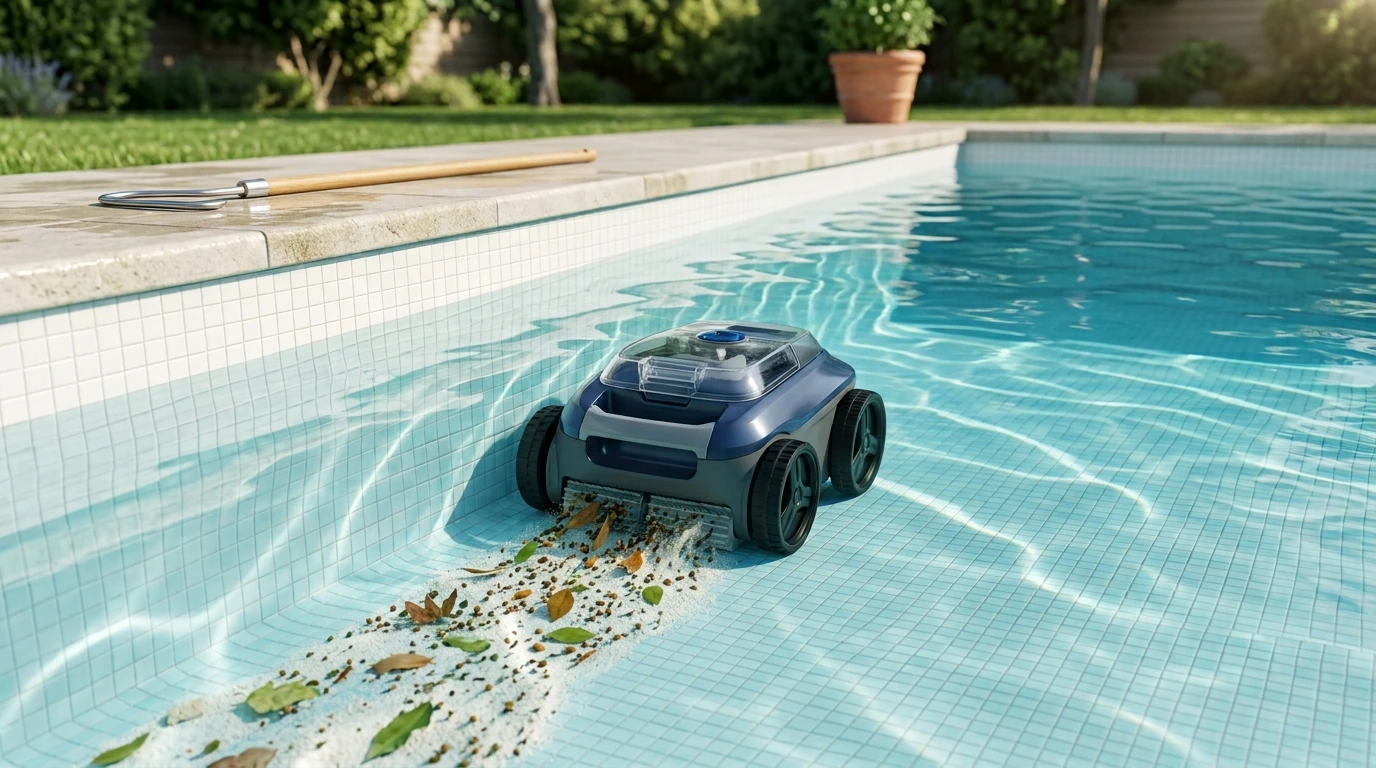
Efficient Cordless Pool Cleaning Without the Cord Hassle
A cordless robotic pool cleaner streamlines routine maintenance by combining untethered movement, strong debris pickup, and an end-of-cycle self-parking feature that makes retrieval easier. Instead of dragging hoses across the deck or babysitting a manual vacuum, you can drop the unit in, let it run, and empty the basket when it’s done—helping keep the pool floor swim-ready through wind, yard work, and everyday debris.
If you’re shopping for a cordless model with advanced suction and self-parking, the goal is simple: consistent floor pickup, quick deployment, and less friction in your weekly pool routine.
What This Cleaner Is Designed to Solve
- Reduces hands-on pool cleaning time by automating debris pickup and circulation-assisted cleanup.
- Avoids cord tangles and the need to manage a power cable across the deck.
- Targets day-to-day debris like sand, leaves, and fine particles that collect on the floor.
- Adds convenience at the end of the cycle with self-parking for faster retrieval.
For many residential pools, the “pain points” aren’t occasional deep cleans—they’re the frequent touch-ups that keep the floor from feeling gritty and the water from looking dusty. A cordless robot is built for that cadence: easy to start, easy to remove, and easy to maintain.
Core Features That Matter Day to Day
- Cordless operation: supports quick deployment without setting up an external power supply.
- Advanced suction: focuses on lifting settled debris from the pool floor and collecting it in an internal filter/basket.
- Self-parking behavior: aims to finish in a predictable location (often near a wall) to simplify removal from the water.
- Compact form factor: easier to carry, store, and rinse after use.
- Straightforward controls: typically designed for simple start/stop use rather than complex programming.
If you value an uncomplicated routine, look for a model that’s comfortable to lift, has a basket you can open without fuss, and reliably completes its cycle without needing constant checks.
Cleaning Performance: What Influences Results
- Debris type: fine silt and dust require consistent suction and a properly seated filter; larger leaves may fill the basket faster.
- Pool floor condition: algae film or heavy debris layers may require brushing first for best pickup.
- Water chemistry and clarity: balanced water reduces buildup and helps the cleaner maintain traction and efficiency.
- Run frequency: shorter, more frequent sessions often outperform infrequent deep cleans.
- Obstacles and geometry: drains, steps, and ledges can change pathing and affect coverage patterns.
One practical strategy is to treat the robotic cleaner like a “maintenance cycle” tool: run it often enough that debris never becomes a thick layer. When you do need a reset after a storm, skim first and consider a quick brush to lift fine particles off the floor.
Self-Parking and Retrieval: Practical Tips
- Allow the cycle to complete so the cleaner can initiate its parking behavior.
- Use a pool hook or retrieval tool if needed, especially for deeper pools or limited reach.
- Rinse and empty the basket soon after removal to prevent debris from drying inside the filter.
- Store the cleaner out of direct sun when possible to protect seals and plastics over time.
Self-parking is most helpful when you let the cleaner finish naturally. Stopping it early can leave it in the middle of the pool—making retrieval less predictable and sometimes requiring extra reaching.
Battery and Cordless Convenience
- Charge habits: top up after each cycle and avoid long-term storage at extreme temperatures.
- Cycle planning: run the cleaner when debris is highest (after wind, mowing, or storms) to reduce manual skimming and vacuuming.
- Dry handling: ensure charging ports and connectors are dry before charging.
- Storage between uses: rinse, drain, and let the unit dry before putting it away.
Setup and First Run Checklist
Maintenance Routine for Consistent Suction
Pool Compatibility and Best-Fit Scenarios
Cleaning Options Compared
| Method | Setup effort | Typical strengths | Typical trade-offs |
|---|---|---|---|
| Cordless robotic cleaner | Low | Quick deployment, independent debris capture, easy routine cleaning | Battery charging, basket must be emptied regularly |
| Manual vacuum (pole + hose) | Medium to high | Spot-cleaning precision, good for heavy localized debris | Time-consuming, hose management, depends on user effort |
| Suction-side cleaner | Medium | Leverages existing pump, continuous automated cleaning | Can reduce skimmer suction, relies on pool system performance |
| Pressure-side cleaner | Medium | Handles larger debris well in some setups | May need booster pump, more plumbing dependence |
Common Issues and Quick Fixes
Recommended In-Stock Picks
- Efficient Cordless Robotic Pool Cleaner with Advanced Suction & Self-Parking
- Simple AI-Powered Relaxation You Can Feel | AI Breathing Exercises for Relaxation | Digital Guide for Daily Calm and Stress Relief
Safety and Water-Care Resources
Keeping a pool clean goes hand-in-hand with safe, healthy water and smart habits around the pool area. For additional guidance, review information from the CDC Healthy Swimming program, the U.S. Consumer Product Safety Commission (CPSC) pool and spa safety resources, and the Pool & Hot Tub Alliance (PHTA).
When This Cleaner Makes the Most Sense
FAQ
How does a self-parking pool cleaner help after a cleaning cycle?
Self-parking is designed to bring the cleaner to a predictable, easier-to-reach spot—often near a wall—so you spend less time locating it. In deeper pools, a simple retrieval hook can make removal faster and safer.
How often should the filter or basket be cleaned to maintain strong suction?
Empty and rinse the basket after every run to keep suction strong and prevent clogs. If the pool has heavy debris or fine dust, check it mid-cycle because a full or clogged filter reduces pickup and coverage.
Can a cordless robotic cleaner handle fine sand and silt?
Yes, it can pick up sand and silt effectively when the filter is clean, properly seated, and rinsed frequently. If silt is stuck to the surface, brushing first and running shorter, more frequent cycles typically improves results.





Leave a comment