Compact Countertop Dishwasher: Built-In Tank + Programs

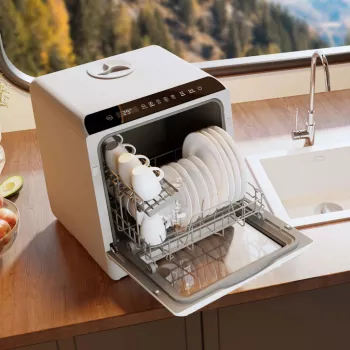
Compact Countertop Dishwasher with Built-in Water Tank & Multiple Washing Programs
A compact countertop dishwasher with a built-in water tank is made for small kitchens and flexible setups where a permanent water line may not be available. Instead of remodeling cabinets or calling a plumber, many people can place the unit on a sturdy counter, fill the tank, and run a cycle. Multiple washing programs add everyday convenience—helping lightly used glasses, greasy plates, and delicate items get the right level of cleaning while keeping water use and cycle time in check.
Who This Style of Dishwasher Fits Best
- Apartment kitchens, RVs, dorm-style living, and offices where space is limited
- Homes with limited plumbing access (a built-in tank supports fill-and-run operation)
- Households that wash smaller daily loads and want to avoid a full-size machine
- Anyone wanting multiple programs for quick refreshes, heavier soil, and gentle washes
For many small households, the biggest advantage is consistency: instead of letting dishes pile up in the sink, you can run a smaller load more often—without committing to the footprint and installation requirements of a traditional built-in model.
Key Features That Matter Day to Day
- Built-in water tank: Enables operation without a dedicated water hookup; useful for temporary setups.
- Multiple washing programs: Choose a cycle that matches soil level, time available, and sensitivity of dishware.
- Countertop footprint: Sized to sit on a sturdy counter; placement near a sink can simplify draining.
- Spray coverage and rack layout: Affects how well plates, bowls, and cups get cleaned when fully loaded.
- Drying approach: Look for a drying phase that suits typical loads (plastics often dry differently than glass/ceramic).
- Controls and indicators: Clear program selection and status lights reduce guesswork during daily use.
In real use, the best countertop units feel “set-and-forget”: straightforward controls, a rack that’s easy to load, and predictable results when dishes are scraped and positioned correctly.
Washing Programs: What They’re For
Multiple programs aren’t just nice to have—they help match the wash action to what’s in the rack. That means you can run a faster cycle for a couple of coffee mugs, then switch to a more intensive option when dinner includes sticky sauces or greasy pans.
- Quick/express-style cycles: Best for lightly soiled dishes or a same-day refresh.
- Normal/everyday cycles: Balanced cleaning for mixed loads of plates, bowls, and utensils.
- Heavy/intensive cycles: Better for baked-on residue, greasy cookware, or heavily soiled items.
- Glass/delicate cycles: Gentler washing for glassware and more fragile pieces.
- Rinse/hold options (if available): Helps prevent odors when waiting to run a fuller load.
- Program choice affects time, water use, and results: Scrape food scraps and load correctly for best performance.
Common Program Types and When to Use Them
| Program type | Best for | Typical trade-off |
|---|---|---|
| Quick | Light soil, glasses, small daily loads | May not handle baked-on residue |
| Normal | Mixed dish loads, everyday use | Moderate cycle time |
| Heavy/Intensive | Grease, stuck-on food, cookware | Longest time and often higher water/energy use |
| Glass/Delicate | Glassware and fragile items | Less aggressive; may require pre-rinse for heavy soil |
| Rinse/Hold | Preventing odors before a full wash | Not a cleaning cycle; no drying |
Tank Fill vs. Faucet Hookup: Practical Setup Notes
- Tank fill mode: Fill the internal tank, close the lid/cap securely, and run a program—ideal when a faucet adapter is inconvenient.
- Faucet hookup mode (when supported): Can reduce manual filling but may require an adapter that matches the faucet thread.
- Drain planning: Many countertop units drain via a hose into a sink; ensure the hose is positioned to avoid backflow.
- Counter stability: Place on a level surface that can safely hold the appliance and a loaded rack.
- Ventilation and clearance: Leave space around the unit as recommended by the manufacturer for safe operation.
If the unit will drain into a sink, plan the layout so the hose won’t get pinched when you move items around the counter. A stable, uncluttered placement helps prevent vibration and makes loading safer.
Capacity, Loading, and Real-World Cleaning Results
Water and Energy Use: What to Expect
For general efficiency guidance and dishwasher considerations, ENERGY STAR offers helpful reference information: ENERGY STAR — Dishwashers. For broader water-efficiency education, the EPA provides resources here: U.S. EPA — WaterSense.
Care, Cleaning, and Troubleshooting Basics
Product Options
-
Compact Countertop Dishwasher with Built-in Water Tank & Multiple Washing Programs
— $455.32 (USD). A space-saving choice designed for flexible placement and convenient cycle selection. Check current availability and pricing before ordering. -
Simple AI-Powered Relaxation You Can Feel | AI Breathing Exercises for Relaxation | Digital Guide for Daily Calm and Stress Relief
— $6.99 (USD). A quick digital guide for winding down while the kitchen resets.
FAQ
Can a countertop dishwasher run without a sink hookup?
Yes—models with a built-in water tank can be manually filled and run without connecting to a faucet. You still need a safe place for the drain hose to discharge water, which is commonly a sink or another appropriate drain point.
What dishes clean best in a compact countertop dishwasher?
Plates, bowls, cups, and utensils typically clean very well when loaded to allow spray access. Heavily baked-on cookware may require a heavy cycle and careful placement, and oversized pans may not fit depending on the rack size.
How often should the filter be cleaned?
For frequent use, weekly cleaning is a practical baseline, while lighter use may allow longer intervals. Clean it sooner if you notice odors, poor cleaning results, or slower draining, and follow the schedule recommended in the manual.






Leave a comment